
The Wooden Wonder Doctrine
Why a wooden bomber from 1941 still describes how we teach personal protection in 2026.
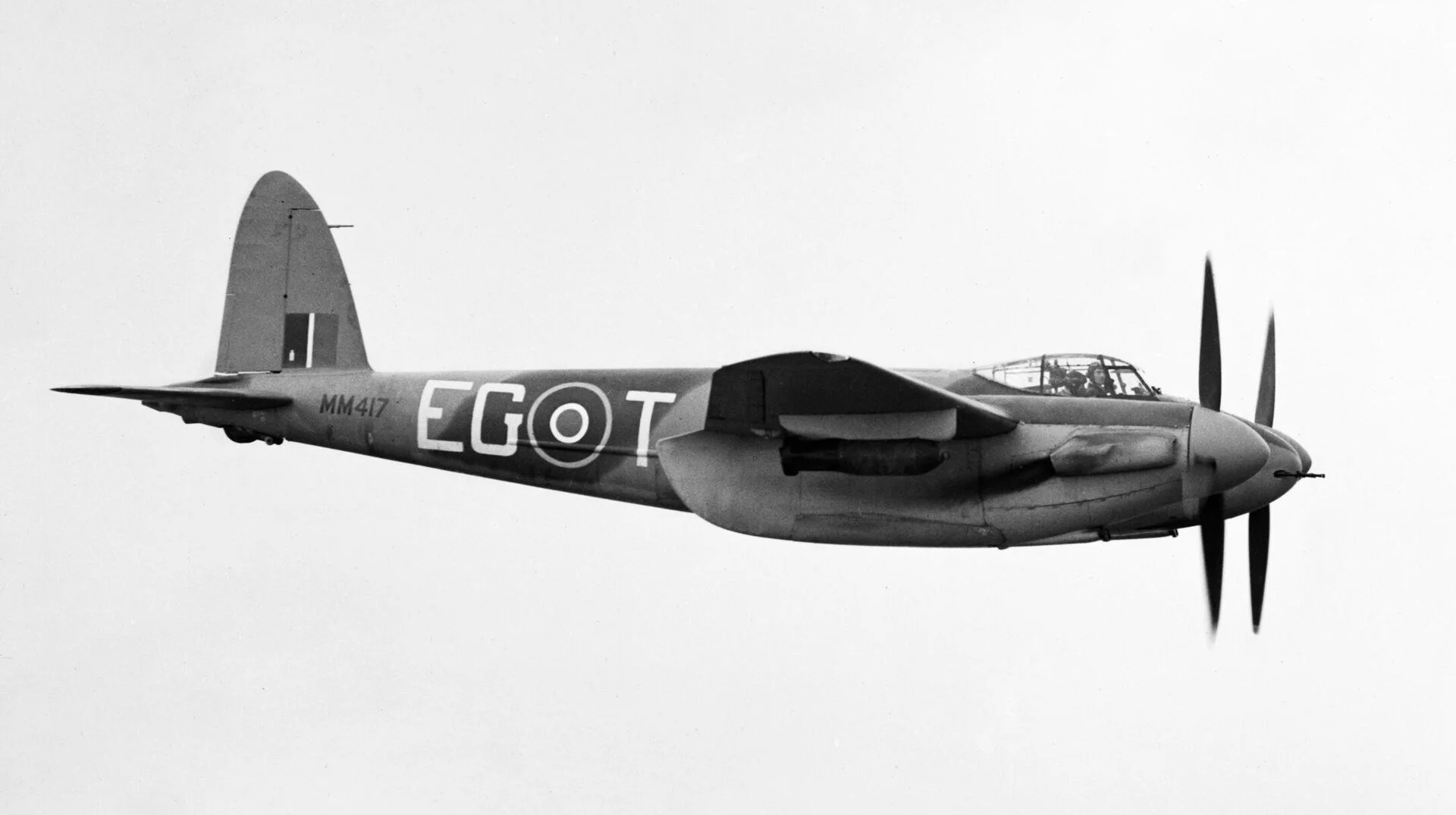
“The fight you train for is almost never the fight you get.”
In November 1940, a strange aircraft rolled out of a hangar in Hatfield, England. It was made of wood. It carried no defensive guns. The Air Ministry had told its designers, repeatedly, that the idea was absurd. The factories were tooled for metal. Bombers needed gun turrets. The war was no place for cabinet-makers.
The aircraft was the de Havilland Mosquito, and it became one of the most effective combat platforms of the Second World War. Bomber. Night fighter. Pathfinder. Photo-reconnaissance. Anti-shipping strike. Precision raid. Same airframe. The crews called it the Wooden Wonder.
We think about that airplane a lot at Raven and Rose Training. Not because we're aviation nerds, though we are. Because the Mosquito is the cleanest historical example of the philosophy that runs through Beyond the Holster.
Full-spectrum, one airframe: why specialists lose
The Air Ministry of 1939 wanted specialists. A bomber was a bomber. A fighter was a fighter. Reconnaissance was its own thing, with its own aircraft, its own doctrine, its own factories.
The Mosquito refused that bureaucracy. The same wooden fuselage flew low-level pinpoint strikes in the morning and night intruder missions over Germany after dark. It marked targets for the heavy bombers. It hunted U-boats. It outran the Luftwaffe at altitudes where the Luftwaffe wasn't supposed to be outrun.
We borrow a phrase from the Department of Defense and call this full-spectrum superiority. Dominance in mindset, strategy, tactics, firearm, contact weapon, empty hand, and the legal and psychological aftermath. Most defensive training picks a lane. Pistol classes teach pistol. Jiu-jitsu schools teach jiu-jitsu. Concealed-carry instructors hand you a holster and call it a day.
That worked for the Air Ministry until the Mosquito showed up. It works for self-defense students until violence shows up and refuses to stay in its lane. The fight you train for is almost never the fight you get.
This is the philosophy behind Beyond the Holster, our two-day full-spectrum intensive in Portland.
Speed over armor: the cheapest fight is the one you don't have
The original Mosquito specification proposed something nobody believed: an unarmed bomber. No gun turrets. No tail gunner. Strip the defensive weight and use the saved performance to fly faster and higher than anything that could intercept you.
The idea was heresy, but it was correct. A Mosquito Mk IV bomber at 30,000 feet was effectively untouchable until the late-war jets arrived.
The lesson is older than the airplane. Sun Tzu wrote that the greatest victory is the one that requires no battle. John Farnam compressed it into the Rule of Stupid: don't go to stupid places, at stupid times, with stupid people, doing stupid things. We open Saturday morning of Beyond the Holster with this material because the cheapest fight to win is the one you don't have. Avoidance is not cowardice. It is the de Havilland design choice, applied to your Tuesday night.
When you can't avoid, you de-escalate. That is not weakness — it is a probe, a way of finding out what you are actually dealing with before you commit. If de-escalation fails, you escalate decisively. Speed and altitude. Get inside the decision cycle of the person trying to hurt you, and stay there.
Built by cabinet-makers: principles, not a technique inventory
The Mosquito was built by furniture companies. Piano factories. The Wrigley chewing-gum plant in Canada. People who already knew how to laminate wood and shape compound curves, working from a design that respected what their hands could already do.
The aircraft existed because Geoffrey de Havilland trusted craftsmen over committees. He did not draw up a complex new manufacturing system and force people into it. He looked at the skills that already existed and built an airframe that those skills could produce.
That is exactly how myelination builds defensive skill. We do not hand you twenty memorized techniques and hope you remember the right one at 2 a.m. We teach principles — our MASCH framework, the battlefield geometry, the reactionary gap — that map onto what your nervous system can already do under stress. We use varied practice and rotating focus instead of drilling one move two hundred times, because that is how skill actually transfers from the mat to the parking lot. The flinch response you were born with is the laminated birch we are building from. We are not asking you to become someone else. We are asking what your body already knows and building an aircraft that flies on it.
The Wooden Wonder looks wrong — and so does the Sternum Brace
Photographs of the Mosquito under construction look like a yacht hull. Long strips of balsa and birch laid up over concrete molds. Glued, not riveted. The thing should not have worked.
The Sternum Brace — our name for the two-handed, attacker-anchored contact press we teach for grappling-range gun work — looks wrong too. Existing literature anchors the gun on the shooter's own ribcage and calls that retention. The Sternum Brace anchors on the attacker. Support hand on the dominant wrist, not the slide. Muzzle elevated toward the head. People see it for the first time and their face does the thing the Air Ministry's face did in 1940.
Then they run it against a resisting partner in our Bullet Time drills and it works, the way the Mosquito worked over Berlin. Orthodoxy is not the same as correctness. A wooden airplane is not a bad airplane because the factories were tooled for metal.
Pathfinders: why Saturday morning has no guns in it
The most interesting Mosquito mission was the one nobody talks about. Pathfinder squadrons flew ahead of the main bomber stream, marked the target with coloured flares, and got out before the heavy aircraft arrived. The whole raid's accuracy depended on a small fast aircraft going in first and seeing clearly.
The first block of Beyond the Holster is pathfinder work. Before we touch a mat, before we draw a single training pistol, we spend a full morning on how to think about violence. The AOJP framework — Ability, Opportunity, Jeopardy, Preclusion — for thinking through use of force. The three types of encounter — Ego Fight, Interview, Ambush — and the different response each one demands. Hard-target body language. The legal aftermath. What you are actually trying to accomplish, and what the law will say about it on Monday morning.
You can have the best heavy bomber in the world. Without a pathfinder, you bomb a field. Most defensive training is heavy bombers all the way down. Beyond the Holster sends the pathfinder first.
What Raven and Rose is trying to be
The Mosquito existed because a private company built a private prototype on its own money while the Air Ministry was telling it to stop. The Air Ministry came around eventually. Geoffrey de Havilland was right and the committee was wrong, and the war was won partly by people who had the nerve to ignore the committee.
Raven and Rose Training is not trying to be the Air Ministry. We are not trying to be a chest-thumping warrior-camp brand either — the Spitfire was glorious and we love the Spitfire, but the Mosquito won missions the Spitfire could not have flown. We are trying to build the wooden airframe. Full-spectrum. Principles over inventory. Speed over armor. Skill in the hands of cabinet-makers.
If that sounds like what you have been looking for and never quite found, that is not an accident. That is the design.
Beyond the Holster — October 24–25, 2026
Public Safety Training Center, Portland OR. Co-taught by Phill Juffs and AJ Hall. 8 students maximum.
Who teaches this
Phill Juffs — "The Raven." Twenty-five years of martial arts behind him, starting in his late teens: boxing, aikido, escrima, and the WWII combatives lineage that runs through this whole essay. Certified defensive firearms instructor. He has coached hundreds of people through the gap between knowing a technique and owning it.
AJ Hall — "The Rose." Began her firearms training in 2016 and went through formal instruction at the Oregon Public Safety Training Center. NRA-certified pistol instructor and Range Safety Officer, and the facilitator of the Portland chapter of A Girl and A Gun — the largest women-founded shooting organization in the country. She teaches technique, gear, and firearm selection, and she teaches confidence alongside them.
